

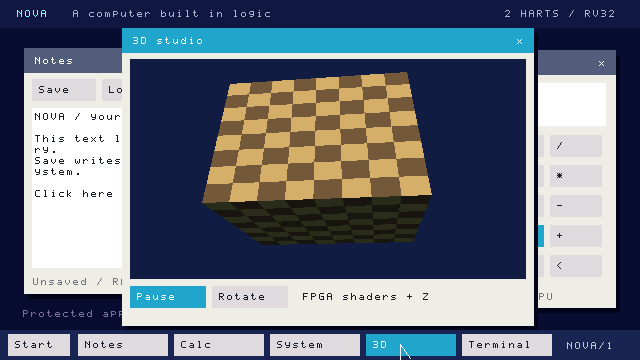
Frame captured from the board's video memory.
Kria KR260 / Vivado / LiteX
NOVA RISC-V computer
A two-core RISC-V computer on the Kria KR260, with a small custom operating system and a fixed-point GPU in the FPGA fabric.
View case studyHi, I’m Nicholas.
Electrical & computer engineering at Northeastern. From the circuit board to the code that brings it to life.

From an idea to a working system.
Hardware, software, and the space between.
 Mindset Technologies
Neural-interface hardware and software, from EEG electronics to signal processing and interactive applications.
View case studyFrame captured from the board's video memory.
Kria KR260 / Vivado / LiteX
A two-core RISC-V computer on the Kria KR260, with a small custom operating system and a fixed-point GPU in the FPGA fabric.
View case study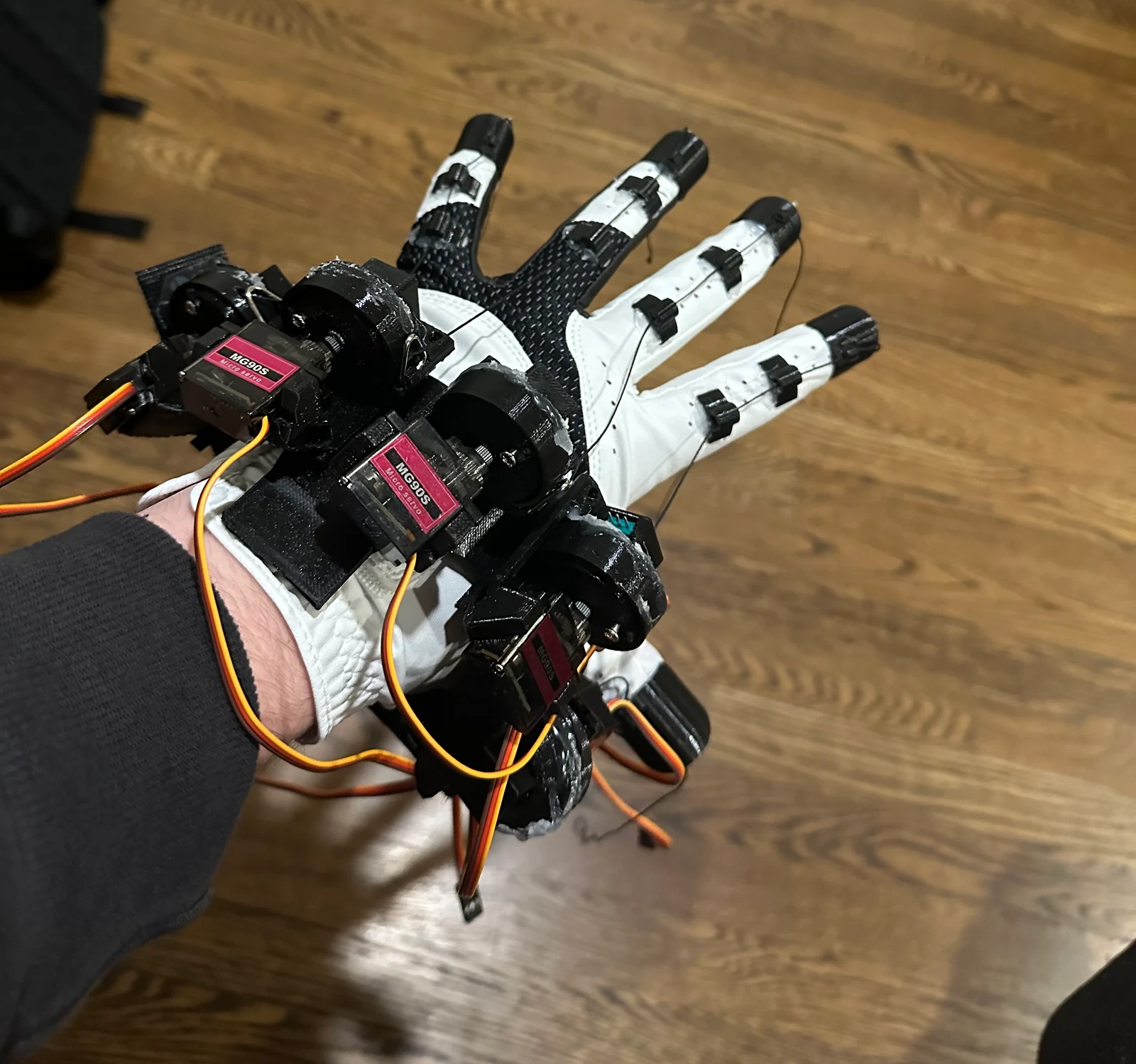
VR / Motors / Mechanical linkage
VR haptic gloves combining arm stimulation with motor-driven resistance that responds to the virtual scene.
View case studyPython / FastAPI / SQLite
A local assistant for engineering projects, with persistent memory, voice input, coding agents, and CAD and electronics tools.
Inspired by Jarvis, I built my first version in eighth grade: a chatbot that parsed questions and called WolframAlpha to answer math problems. I’ve kept developing the idea since then.
View case studyRTL simulation, KR260 target
Hardware operand reuse cuts full-panel simulated bus cycles from 18,080 to 10,922. A two-layer digit classifier checks the Python-to-RTL path.
View case studyMeasured on DGX Spark
Five CUDA kernels explore fusion, reduction, and register pressure. Tuning the 256 × 8192 FP16 case reduced graph time from 28.05 to 17.97 µs.
View case studyI built the original computer from scratch in ninth grade, from September 2021 to February 2022, with custom clocking, address decoding, memory banking, and memory-mapped I/O.
The later v2 revision adds a USB keyboard bridge and discrete VGA graphics. Explore its motherboard and VGA card below, exported from the actual KiCad designs.
View case study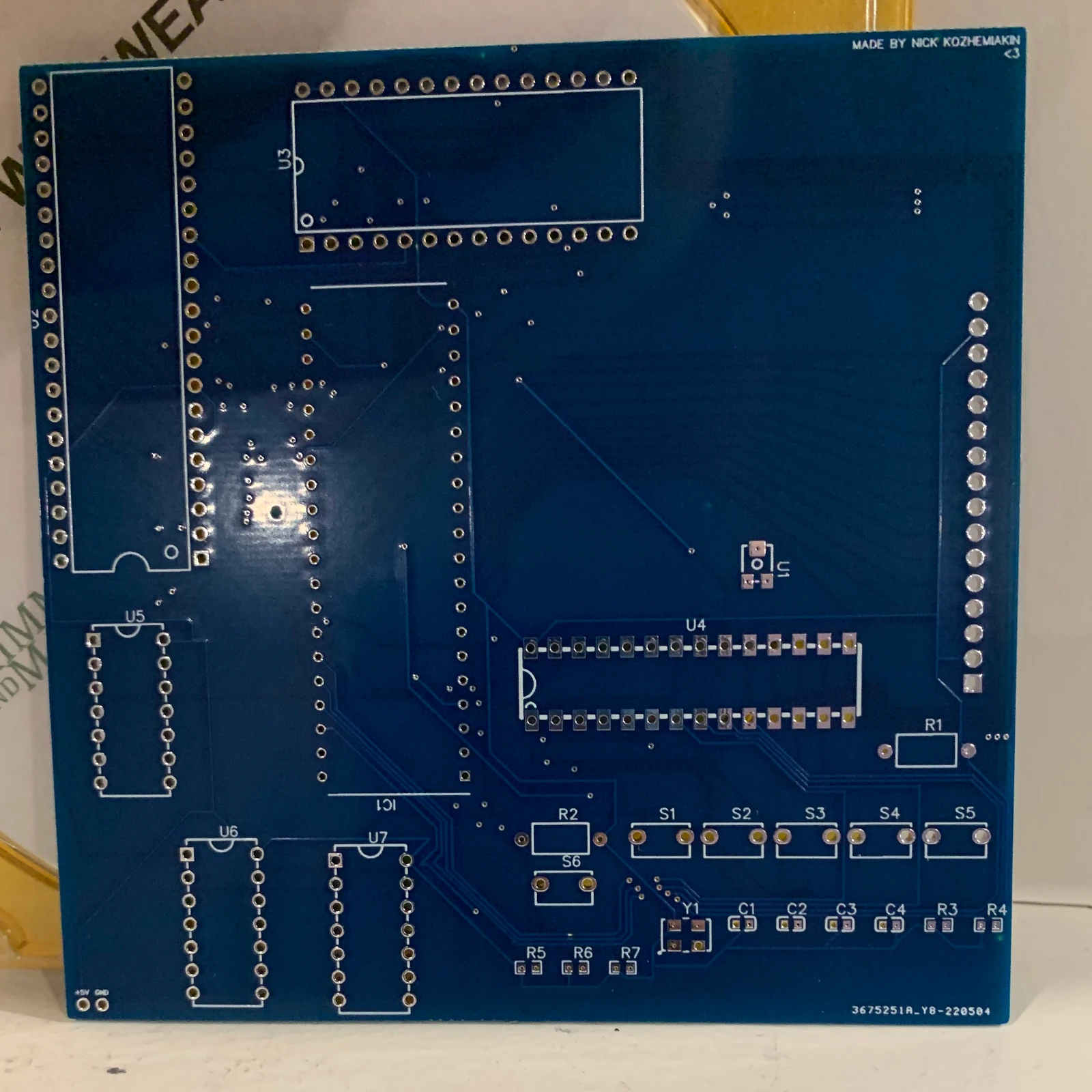
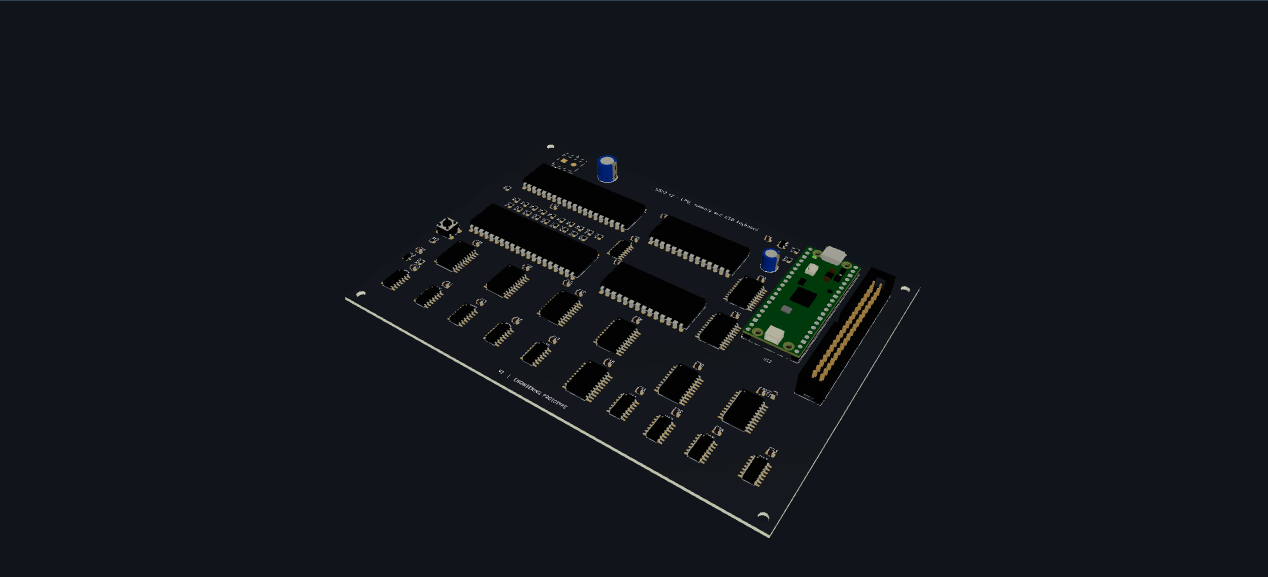
The motherboard loads in 3D as you scroll here. Choose either board above.
An 8-bit ALU in SystemVerilog, integrated with a Kria KR260 and controlled from Python on Linux through AXI GPIO.
Set two 8-bit operands and an op code. Addition and subtraction share one ripple-carry adder. To subtract, the ALU inverts B and feeds a 1 into the carry input, so A − B is computed as A + (inverted B) + 1. The carry row shows how each column's carry moves left.
Examples
200 + 100 = 300, which needs nine bits. The ALU keeps the low eight bits (44) and sets carry.
What Python sees through AXI GPIO
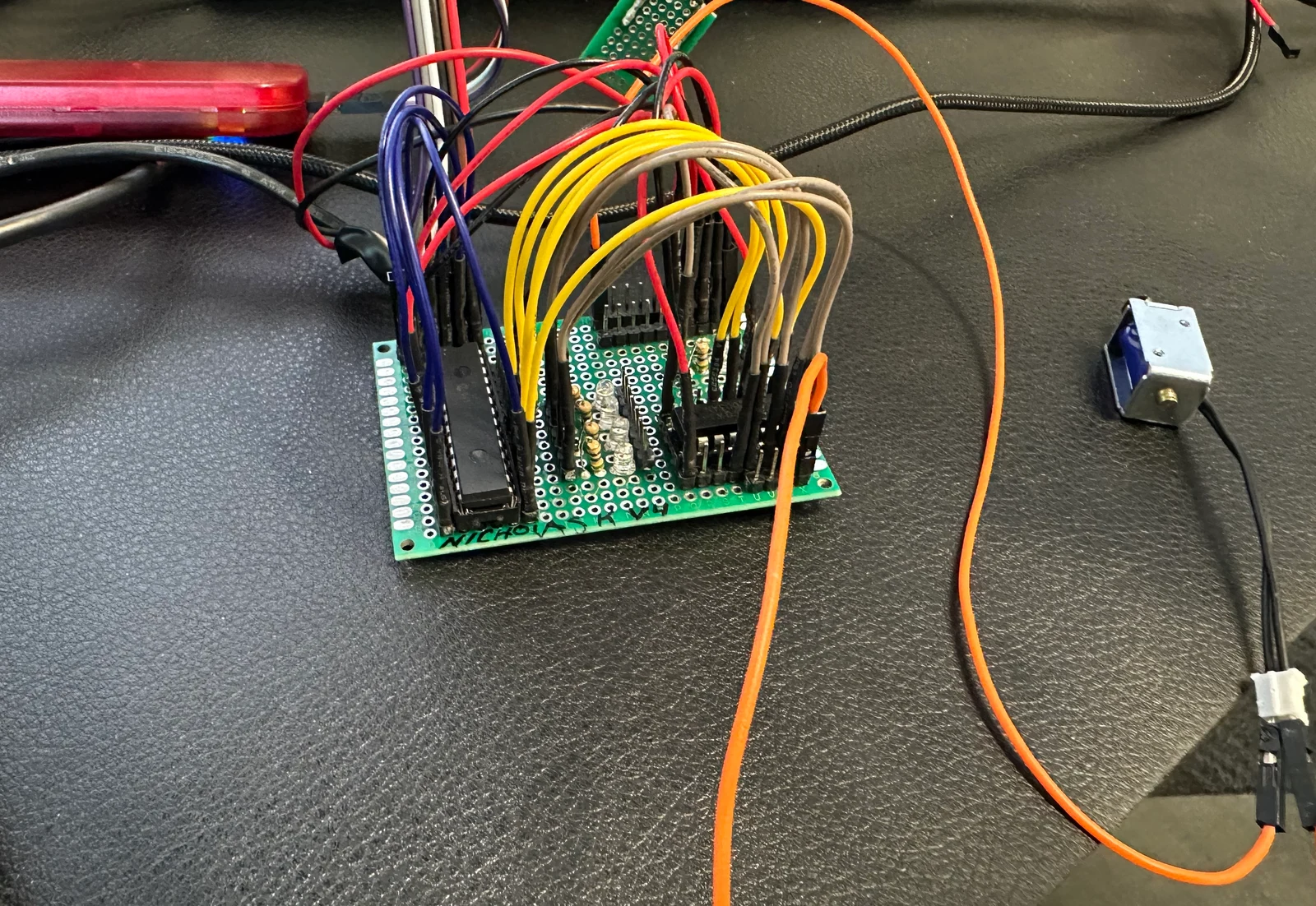
June 2024
A solenoid-driven fixture for testing payment-terminal inputs, with Python automation for repeatable cycles and measurement logging.
View case studyJune 2026
An EMG signal-processing pipeline built with Holoscan and CUDA, connecting acquisition and replay input to processing and control interfaces.
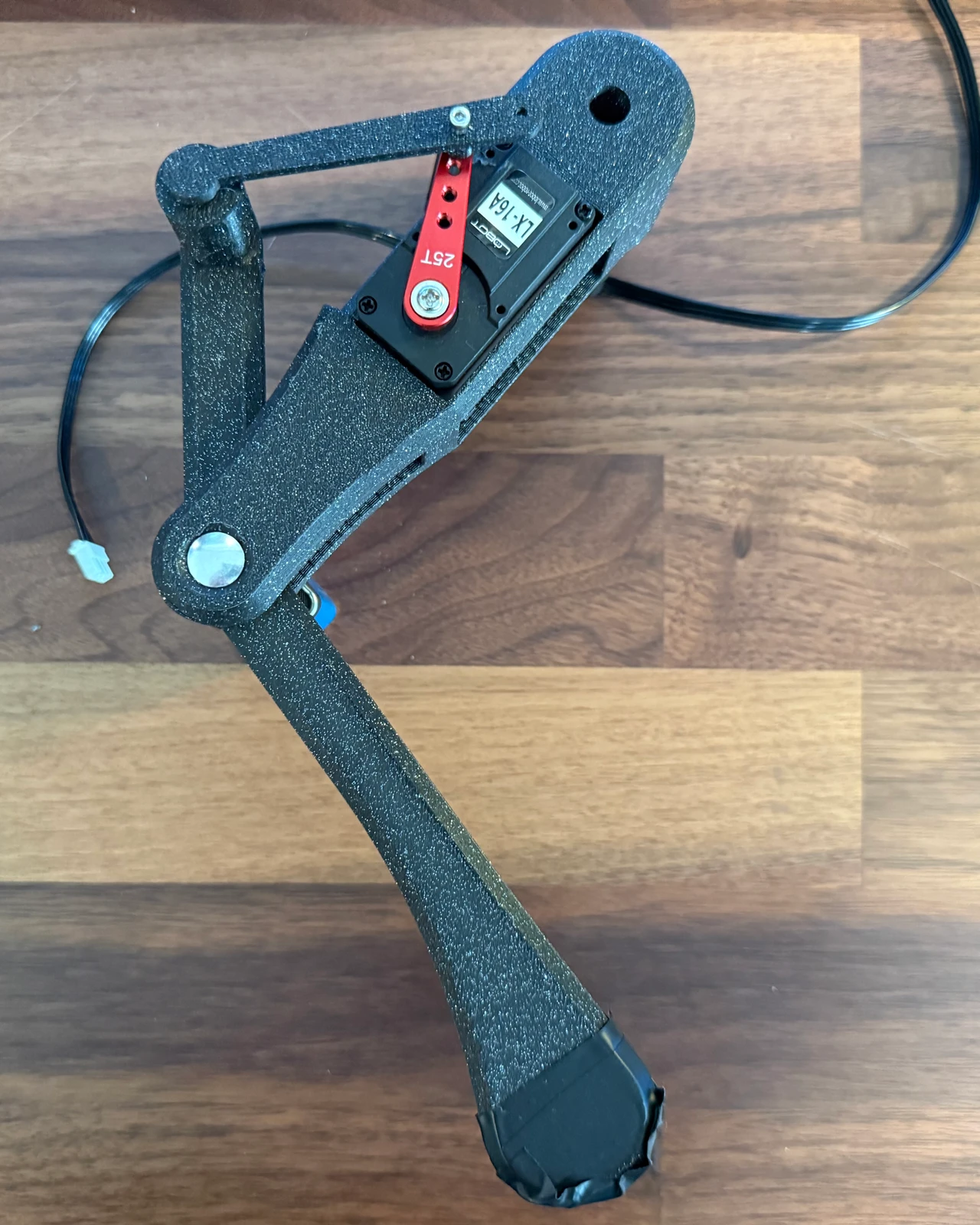
January to February 2023
A single leg assembly exploring servo-driven joints and printed mechanical parts.
View case studyMay to June 2026
A native macOS assistant that reads screen context and either guides the user or performs approved actions.
View case studyApril 2026
A coordinator for GPU jobs across several machines, with worker assignment, failure recovery, and usage accounting.
View case studyApril 2026 · Cursor Boston Hack-a-Sprint winner
A TypeScript workflow for daily AI-agent briefings from structured logs, with email summaries, an issue-triggered phone path, and report history.
View case studyApril 2026
A terminal coding assistant with local and remote model routing, tool use, and a focused command-line interface.
View case studyMarch to April 2026
An OpenClaw administration console with sign-in, roles, configuration history, and workflows across multiple bots.
View case studyAbout
I’m the founder and lead engineer at Mindset Technologies. At Northeastern’s Erdogmus Lab, I research low-cost neural interfaces with support from a PEAK Base Camp Award.
Previously, I worked on hardware and robotics at Aurus, and in audiovisual sales and project management at Bang & Olufsen Boston.
View résuméEngineering roles, research, or projects.


